Have you noticed that more and more professional footballers play with mini shin guards? Smaller, lighter and almost invisible under the sock. We see them more and more in amateur football and futsal too. But are they right for everyone, are they allowed, and how much do they really protect? Here is everything you need to know before you choose.
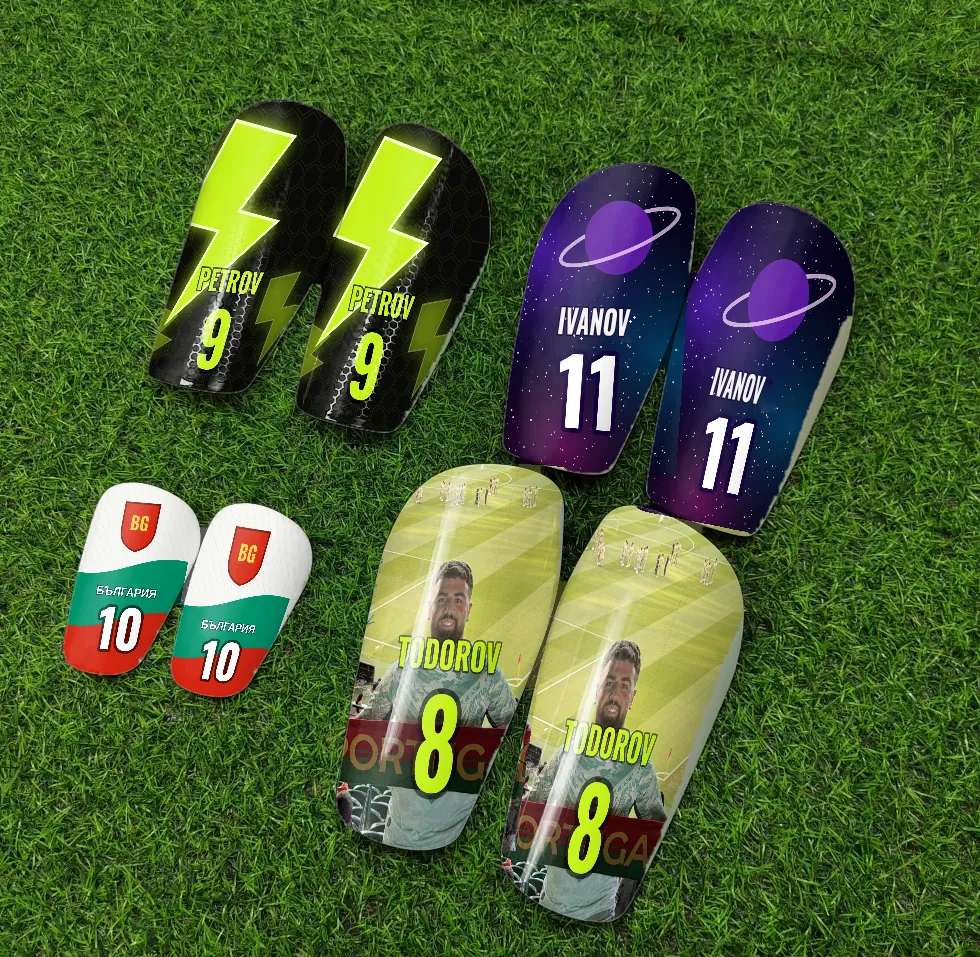
What are mini shin guards
Mini shin guards are much shorter than classic ones. An adult's regular guard is 16 to 21 cm tall and covers almost the whole shin, while a mini guard is about 8–10 cm and protects only the middle of the bone. They are usually worn without straps or ankle protection, held in a sleeve or straight under the sock.
Why the pros wear them
Freedom of movement
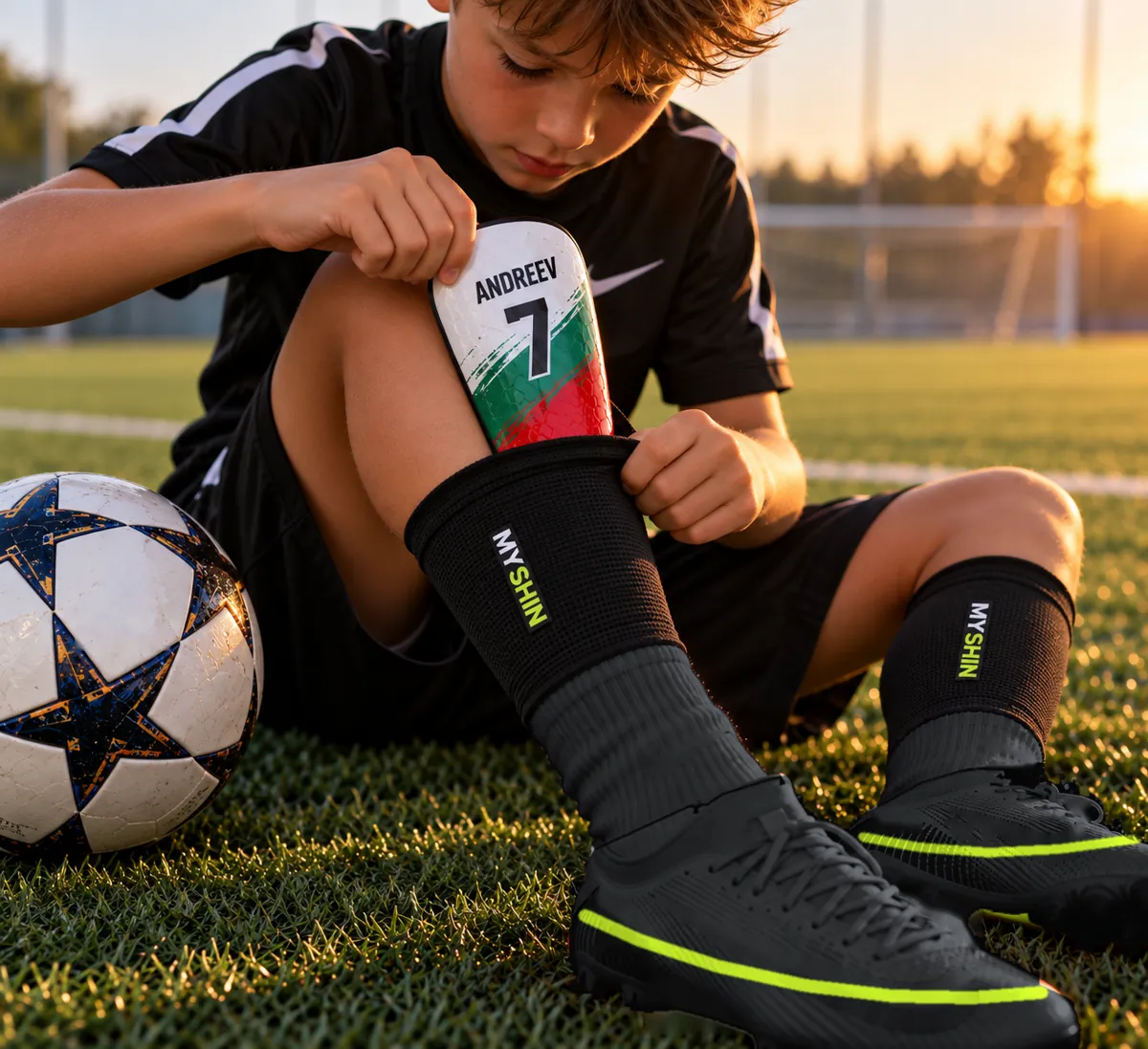
A classic guard often reaches almost down to the ankle. Every time you flex your foot, sprint or strike the ball, it can press into the leg. A mini guard sits only on the middle of the shin, so the ankle and calf stay completely free.
More comfort
A smaller guard is also lighter. Many players say that after a few minutes they don't feel it at all. You sweat less under it and the sock sits smoother.
They sit on the bone, not the muscle
The shin bone is flattest and most exposed in the middle. That is where a mini guard sits tight. A big guard that doesn't fit the leg well can press on the muscle at the side or twist when you run.
A modern look
Many players simply like the cleaner look of the leg. The sock sits tight, with no bulges above or below, and match photos look better.
Jack Grealish is one of the best-known players who made mini shin guards and low-pulled socks part of his style. Many young players have copied him since.
Are they allowed by the rules
Law 4 of the IFAB Laws of the Game, which applies to official matches all over the world, says this about shin guards:
- They are compulsory for every player.
- They must be fully covered by the socks.
- They must be made of a suitable material and be of an appropriate size to provide reasonable protection.
- The player is responsible for their size, not the referee.
The Law gives no exact centimetres. It only says the size must be "appropriate". So mini shin guards are not banned by the Laws, and in adult matches they are accepted almost everywhere.
But be careful: more and more clubs and youth leagues are banning mini shin guards. Here are two examples from England:
- The youth academy of Holbeach United banned mini shin pads with immediate effect (December 2024), after a visiting player wearing them suffered a serious injury.
- Binfield FC banned micro shin pads for all age groups, in training and matches (November 2025), because the club believes they don't protect enough. In its statement the club notes that the English FA has no such ban.
Before you wear mini guards in official matches, check your league's regulations or ask your coach.
The other side: less protection
We have to be honest here: a smaller guard protects less. A mini guard covers only the middle of the shin. Studs and late tackles land higher and lower too, and there is nothing there to absorb the blow.
So the choice is not "which one is better" but "what matters more to you and to the matches you play".
| Classic guards (S–XL) | Mini guards | |
|---|---|---|
| Protection | Cover almost the whole shin | Only the middle of the shin |
| Comfort | You feel them more | You barely feel them |
| Ankle freedom | Can press when you flex the foot | Completely free |
| Rules | Accepted everywhere | Some leagues ban them |
| Best for | Kids, youth, high-contact matches | Experienced players, training, small-sided games |
When to choose mini and when classic
Choose a classic size from S to XL if:
- the guards are for a child or a youth player;
- you play as a defender or in matches with lots of tackles;
- your league has a rule on shin guard size;
- you have had a shin injury.
Mini guards are a good choice if:
- you are an experienced player and want maximum comfort;
- they are for training, small-sided games or a casual match with friends;
- classic guards bother you so much that you play worse with them.
Our advice: for kids, youth players and high-contact matches, choose a classic size. Mini guards are for players who know what they are doing and consciously choose comfort.
4 tricks so your guards never get in the way
Whether you choose mini or classic guards, these make a big difference:
- The right size. Measure your shin from 2–3 fingers below the knee to the top of your boot. We explain how in What size football shin guards should I choose.
- A sleeve instead of straps. A thin sleeve (like a sock without a foot) holds the guard tight without squeezing the ankle.
- Grip socks. Your foot doesn't slide in the boot, and the team sock on top still covers the guards, as the Laws require.
- Tape in the sock colour. If you put tape on the outside, the Laws require it to be the same colour as the part of the sock it covers. And don't wrap it too tight, so you don't cut off circulation.
MyShin mini shin guards
We have two mini sizes: Mini XS (8 × 5.5 cm) and Mini S (10 × 6.2 cm). You can personalise them just like the classic ones: with your own photo, name and number, printed by sublimation, so the print doesn't peel or fade. All sizes, mini and classic, are drawn to real scale in the size chart.
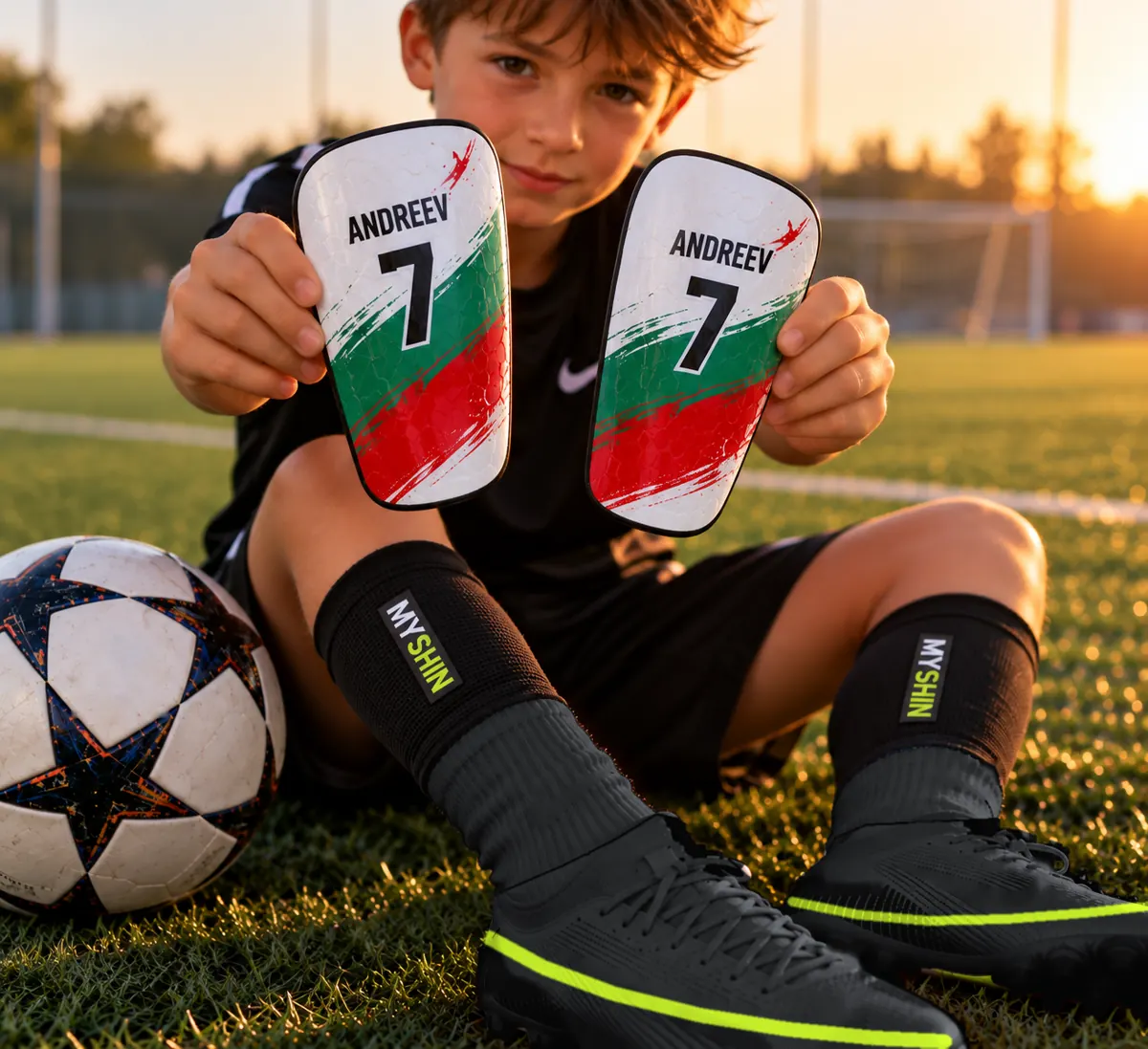
Not sure which size you need? Read how to choose football shin guards or message us on Instagram. And if you already know, design your guards in the editor and see them in 3D before you order.
Frequently asked questions
Are mini shin guards allowed in official matches?
Under the Laws of the Game, yes, as long as they are covered by the sock and give reasonable protection. Some clubs and youth leagues have their own bans, though, so check the regulations.
Are mini shin guards suitable for kids?
We don't recommend them. Kids have less experience in challenges and need more protection, and many youth competitions require classic guards.
How do mini shin guards stay in place?
Best in a thin sleeve or under a tight sock. Some players add tape on top, in the colour of the sock.